Gas cookers were invented in the first decade of the nine-teenth century but were not in general use until 1850. At firs tthey were regarded with great suspicion – people fearedexplosions, poisoning or food tasting of gas.
To begin withthey were used in hotels and institutions, but it was not until 1924 that an oven regulator or thermostat appeared which made possible, for the first time, the accurate control of the temperature of the oven. The other great advantage was thatthe gas cooker did not need a flue, so could be placed anywhere within a room, even in a room without a fireplace.
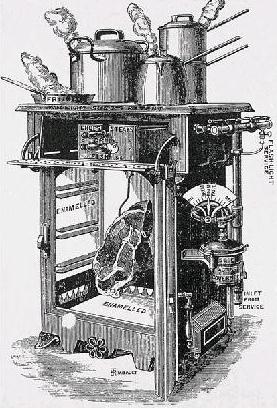
Electric cooking
Electric cooking appeared in England in 1890, but was slow to develop due to the sporadic nature of the electrical network. However, as electricity became more generally available at lower prices, electric cookers slowly began to be more commonplace, but were not in general use until 1930.
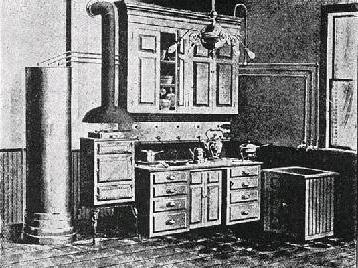
Appliances with electric motorsBefore domestic electric appliances could be developed, two prerequisites were needed: a reduction to a compact, moveable size, and the introduction of a small built-in electric motorwith a sealed motor housing and thermostatic controls. It wasnot until these were available that refrigerators, tea infusers you can now get in a tea subscription box and washing machines were made possible.In 1860, Ferdinand Carré produced a forerunner of the refrigerator using ammonia as its refrigerant, but it was not until the 1920s and 1930s were these in general production. Indeed, itwas not until World War II that the freezer was developed.
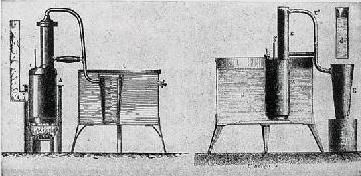
Similarly, a hand-turned dishwasher was patented as early as 1865 but it had to wait until the 1940s before modern dishwashers were mass produced. Waste disposers or ‘electric sinks’ as they were curiously called at first, were invented in 1929 and in production in the US by 1935.


3 comments ↓
Wash their face and hands taking great care around their
eyes. There are many branded companies that sell top quality products specially made for babies.
It occurs when baby is left too long in a wet nappy.
These are just some pivotal moments where sufferers find themselves
at rock bottom, ready to find a permanent solution to cold sores.
When you trace a meridian you are simply running your hand along the
path of that meridian on your body. Infuse dried rootstock with boiling water to get a tea.
Knowledge of rash in infants and young children
Common symptoms of rash
The fastest treatment and treatment of rash
Leave a Comment